Search This Blog

Wednesday, 14 October 2015

First trip to the doctor's

Two days ago I went to the GP here in Munich after my wrist had been hurting and sore for about a year. I thought the problem would pass but nope, it was just getting more disruptive to everyday life. 

A few weeks before, I happened to have been in the UK visiting family and so visited the doctor over there who just gave me a pretty high dose of ibuprofen and some meds to protect my tummy from the anti-inflammatory medication. He said to take that for about a month and then we'd come back and see how it was and whether they'd need to take any bloods or do any further tests. 

I didn't start the medication straight away since the meds for the tummy contained gelatine and so weren't really halal. Plus I was a bit skeptical about taking such strong doses and strong medication when I still didn't know what the actual problem was. 

The GP in Munich told me that the dose prescribed from the doctor in the UK was normal but also referred me to a specialist to have a proper look at my wrist. 

The following day, so yesterday, I went to my appointment with the specialist and I was quite struck by all the differences to the UK healthcare system. While it's all privatised here, so you need a health insurance card to make all appointments, it seems a lot more efficient. The specialist saw me and listened to my problem, took an ultrasound scan straight away in his office, and then, because it was a long-term pain, sent me to get an X-ray done. I almost thought the X-ray was going to take place another day or even if it was the same day, the appointment to see him again would be much later, but in fact I sat outside in another waiting area for my X-ray, was called in and had that done and then soon was called back to see the doctor who told me what was wrong. He told me that I just needed to pick up a cast from one of the orthopaedic centres and to come back in two weeks to see how I progress. That whole process from seeing the doctor at the beginning to leaving the surgery was 1 hour. 

While it might seem long to someone who had to be at work for something that morning, the problem was more or less addressed all the way through in one session instead of several appointments. I also found that the ambience in the surgery was different, with people greeting the group of people already in the waiting room upon entering (something I learnt after I had not done it and saw others doing so after me!) and having a coat stand to allow patients to remove extra layers and feel a bit more relaxed, and providing glasses and a water station in the waiting room. 

It really got me thinking and comparing healthcare systems since I'd never been to the doctor's outside of the UK. I ended up asking lots of questions to my husband, asking about how things worked in France and I feel that there are so many things to learn in looking at the different systems. 

Sunday, 5 July 2015

Unheard Voices: MWNUK Report

Recently my sister forwarded a link to the Muslim Women's Network UK report on a pilot study, published in 2013. While it seems dated, issues in the report don't seem to be being tackled by every day people in society or even being talked about even today.

Not until this report have I ever read anything so horrific and disturbing. The report includes 35 case studies of sexual grooming and exploitation in the UK amongst the Asian/ Muslim community. The report found that often girls were picked according to their vulnerability, which may be caused by several factors, and often the offenders are of the same ethnic background as the victims themselves. The ages "preferred" by the offenders were usually young teens, 13-16,  but there were also younger victims (as young as 9) and older ones (as old as 30). Schools were a significant location where grooming began and young boys were often involved in beginning the cycle of abuse before passing the girls on to older men. While this report focuses on a relatively small sample in the Asian/ Muslim community, it stresses that statistically, such abuse is committed more by White males on White females, despite media coverage that this is a crime committed largely by Asian men against White girls and women.

The shame and honour of the girl and her family was noted as a major factor relating to not pressing charges against the perpetrators, even after the abuse had ended, as well as the girls' own family and friends not believing her, or re-victimising her by insisting that it was her fault and perhaps forcing her into a marriage in order to cover the matter without tackling the root of the problem or searching for the criminals. An interesting observation was also the involvement of other females encouraging or ignoring the offenders' behaviour, and not defending the women.

A shocking case was of a young teenage girl being abused by her own father, brother and uncle, normally considered guardians of the family and the women of the family, and on one occasion her grandmother entered the room to witness the father raping his own daughter, and she simply told the girl not to say anything to anyone because of the shame it would bring on the family: absolutely vile behaviour and mentality.

In another case there was a group of young girls and boys who went to a park and only one girl amongst them was raped by all the boys, with no protest by the other girls.

The extent of such abuse is under recorded and under reported. But the cases that already have been exposed are already too extreme, sinister and disgusting that it would make the blood of any reasonable person boil. A young woman of around 20 years old was being abused in a house by several men, who would call their friends and family to "join in the fun", an ordeal which supposedly lasted around 6 hours. A man even called his 15-year-old son in his school uniform to come and practice on the girl. Here, it is evident that there is a whole community involved that is keeping an enormous and sick secret. A problem we're facing is that no one is vocalising their suspicions about strange relationships and behaviour and even if certain behaviour is recognised to exist, it is not condemned or punished. It is just overlooked.

The case studies were so shocking that I haven't yet had the courage to read them all because I was so disturbed and disgusted. No doubt the pain and trauma of the girls is thousands of times worse, because the reality of these events happening in our own communities, on our doorsteps, on our streets, in our parks and schools, all these strange activities are being ignored or brushed under the carpet by everyday people but these girls live and experience the pain of the ugly side of the community alone, with no help or support. Consequently, male superiority complex is increased, and the next generation is taught once again that women are objects who need to obey male whims.

There is no racial or religious barrier when it comes to stupidity, idiocy or criminality. These criminals can come from all walks of life, of all social classes and racial and religious backgrounds. Often money and social status and reputation protect these offenders, and sometimes just the fact that they're males. Awareness in communities is vital in trying to protect vulnerable girls but also to alert women that they need to be active in condemning this crime because it is a disease in society, one that needs everyone's effort to wipe it out. We are all responsible for protecting vulnerable people in our families, schools, friend-groups and mosques.

A link to the report for those interested: http://www.mwnuk.co.uk/go_files/resources/UnheardVoices.pdf

Wednesday, 22 April 2015

You Are What You Eat

Having been married about 7 months now I've settled down somewhat into a new lifestyle, having had to make some changes and discoveries. While I'm still on that adventure of discovering new places, things and people here I'm quite comfortable and have got into a routine and have something of a regular structure, something essential to me.

For the time being I have been essentially a housewife. Funnily enough I've found that now that I'm sort of "managing the household" and take care of meals (at least on weekdays) and groceries, there is a huge online culture of sharing recipes and household tips (usually but not exclusively by women). The blogs and articles are endless and in the hope to feed children and the entire family wholesome meals, I've come across so many passionate people who are either fighting against processed foods, going organic, turning vegan, living grain-free, consuming organic cold-pressed coconut oil and a whole other array of dietary choices. It's good to know that there are people who are conscious about what they're eating, since often we see that it's not really the case in most families. It is important and no doubt the repercussions of what we eat can be life-changing.

On the other hand it is quite demanding to live in accordance to certain chosen lifestyles. Because Munich has such a wide selection of organic produce, often relatively cheap, we are starting to buy more organic foods but I do realise that many of these options, while they are well-intentioned, often come from a middle class who can afford to spend on certain luxuries (organic-only foods, vegan-only). It's definitely not easy to always find certain things with these restrictions in mind so it's tough for both parties I guess but it's often the people with less in their pockets who have to continue eating the genetically modified processed foods because I know that back in the UK I would rarely, never or accidentally purchase organic produce because it would be so much dearer for "the same thing"; I could get it for half the price.

While Germany has definitely put a lot of organic produce at affordable prices, having such a prominent organic agricultural industry, I feel that many countries are very much behind in this matter, despite the desperate voices screaming out for more support.

Wednesday, 15 April 2015

Tu viens d'où?

A few days ago I attended my friend's nikkah, Islamic wedding ceremony in the UK. I know this friend from university and, naturally, at the reception venue I was seated on a table with some of her other friends from her hometown. While these friends had so many things in common, sharing the same mutual friend, Muslims, similar ages, all female, parental origins in the Indian subcontinent being just some of them, a significant difference between them was whether they were Pakistani or Gujarati.

I noticed the night before that oftentimes there were also condescending references amongst the Gujaratis towards another caste of Gujuratis who also live in the same town. Now while all the friends got along well together and equally participated in the festivities there came a point where one of the girls asked me whether I was Pakistani or Gujarati. Referring to an earlier joke I replied that "I'm an alien". Not quite understanding what I meant I realised she required an explanation and so I proceeded to explain how I do not identify as either Gujurati or Pakistani since my family history is slightly more complicated, originating in the Indian subcontinent as my peers but with a migration to Africa affecting the culture for at least one generation of my family, on both sides. Still quite confused the same friend then decided to ask more about my husband's origins, to perhaps better understand our future children's potential ethnic identity, and so I went on to explain how he has a mixed ethnicity, French with an Indian influence from a grandparent with a Creole culture. Trying the failsafe method she inquired about my surname, which I told her (a rather common Muslim Asian surname) and then I told her my husband's surname upon request. She had never heard of it before and curiously wanted to know where that also came from. I said, "oh! Apparently that's Jewish!" Utterly shocked and in despair she gave up her attempt to find a simple one-word category to place us in.

I found it all rather amusing and by the end the other girls on the table were also laughing away. Often out of Britain I cannot even get away with saying British since I am not white, but Kenya, Uganda and India would instantly consider me a tourist. There's no doubt that your culture, ethnicity and nationality colour your experiences and perspectives of the world but we are in an ever-increasing world of hybrid cultures and mixed nationalities and ethnicities where it is not always possible to categorise someone's entire identity in one word since we have so many more influences in our lives. Despite this, I have heard of and seen some families try to encourage some sort of elitist protection of their family's caste and race to the extent that they "prohibit" their child from marrying outside of a certain, very-closed, circle where the wellbeing of the child is usually not on the agenda at all.

And sadly, we quietly let these things continue in our communities.

Monday, 13 April 2015

Searching for the next step

In what feels like an extended transitory period in my life I find myself happy with so much but bewildered and uncertain about so much more. The rather exceptional change in my life of my union with the man I love and moving countries for an indefinite time has somewhat upturned my life. In so many ways it has improved and I've been multiple times happier than ever before, but recently the trips back home seem to be taking their toll on me.

Naturally everyone I've known also has moved on in life and in various ways, but I seem to be far from even an observer in the matter, as distance doesn't always necessarily make the heart fonder. We're in a busy cycle of never-ending commitments and if you leave the circle, often it's hard to just pop back in intermittently. I've got to either completely let go, or just find another occupation that will aid the transition.

I know that what I have is so precious and beautiful. I know that many would be, and may well be, jealous of my life for it's current ease, but it's also extremely frightening. It's scary trying to make those big steps into a new life that's fulfilling. It's difficult because now I am no longer in a structured academic institution guiding the options available to me, it's liberating and quite nerve-wracking all at once.

Monday, 9 March 2015

Living on the continent

Recently I've been travelling around with my husband over the weekends.

The first weekend we visited Austria to try some sledging with a group of Indo-Pak colleagues from his work. Being my first time, and a road trip, I was rather fascinated at how in Europe the borders are so fluid. I wouldn't have noticed we had crossed from Germany to Austria if a girl in our group hadn't announced it. I took my passport with me, of course, but ultimately didn't require it. It was a rather strange sensation.

The following weekend we visited my in-laws in Paris and this time took the train. On the way there, again, I didn't need my passport but there was a random check on the train back to Munich, which my husband said was the first time he'd been asked for his passport in his over one and a half years of making the same trip.

With Europe having such fluid borders, it made me realise how different it is to live in Britain where travelling abroad is really quite an adventure, one that requires much more preparation, thought and a triple-check that you have your passport on you. While our continent-based counterparts usually will have a national ID card as well as their passport, we're dependent on our little red book. Our island life affects our relationship with the continent no doubt: the Euro currency, the Schengen visa system and much more but we have our own little passageways into Scotland and Wales creating a mini-continent.

But having made these trips, despite the painfully long 6-hour trip to Paris, a sense of excitement and freedom sort of awakened, making me realise how much I can explore just being in Europe alone. I don't have the restrictions of those with the limited Schengen visa, since they can't visit the Uk without applying for a separate visa, and I can just access these new places. It's liberating and fascinating, but all travelling requires a little bit of cash and I guess if I do motivate myself out of being a hermit into more of a traveller, there is quite a lot of potential out there for me.

Below are a couple of pictures of our adventures in Austria

Our hotel

A short walk from the hotel

A mini waterfall on our walk

Walking back up to the hotel

In the town


View from a bus stop

Heading back to the car

A view of the valley from the mountains taken on our sledging route


 And some pictures from Paris:


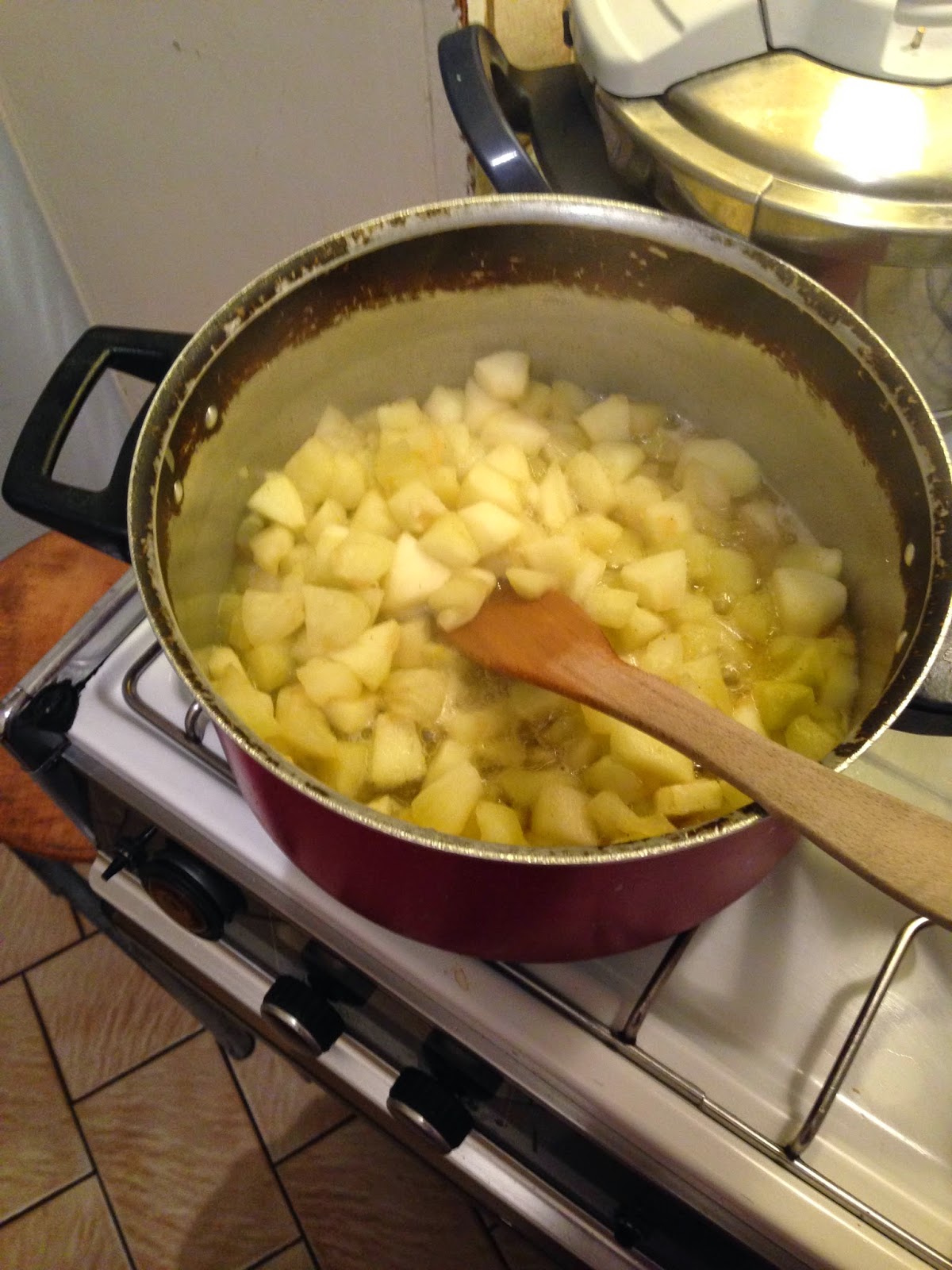
Apple

Crumble

A Tunisian couscous

Batch one of raspberry and white chocolate muffins and a chocolate-covered crème de châtaigne cake 

Second batch of muffins... after one had been stolen

Friday, 6 February 2015

Grocery Shopping

A couple of days ago I had managed to catch up with a friend from college via WhatsApp. It was nice to share a few moments together and we both discussed our life plans and options. Somehow we touched upon the topic of supermarkets and it made me realise how foreign supermarkets are genuinely quite fascinating places to be in.

Naturally I'm used to the British supermarkets because that's where I've lived for the majority of my life but visiting France gave me somewhat of an insight of how every country doesn't have what you think of as a "staple" food product readily available. I began my little analysis of my supermarket adventures here. I already have a favourite, Aldi by far. There are several reasons for this. One is that it is familiar to me because we also have one in my hometown and we go there often. The second is that the prices are not extortionate and the quality is decent. The third is that the packing area located after the tills is extremely helpful and makes my shopping experience miles better; it complements the European system of "bring your own carrier bags or pay for new ones". For some reason the other supermarkets here, namely Rewe and Tenglemann, since there are others too, don't provide you with a space to pack your bags and if you're anything like me and like to get out of the way for the next customer, you're in a bit of a panic trying to pack your bags with an even distribution of weight, not crush delicates, and not rip a bag with a sharp corner of packaging. It all becomes rather stressful. In Aldi, I can just fling all my shopping into my trolley at the till and then go to the packing area to calmly pack my bags and swap and change things around until I'm satisfied I can carry it all back home with me.

I realise that what I have started doing is looking for things that are particularly British in the supermarkets, with the hope to find some familiarity. I have been fairly successful so far, more so than I think I would have been in France and I have found baked beans, Heinz and the own brand at Rewe, and hash browns, both in Aldi and Rewe. I have recently seen a small tub, but a tub nonetheless, of double cream, and have purchased Cathedral Cheddar cheese. The Germans also have whipping cream, which I don't recall finding in France, and my husband seems to think that the aerosol stuff is the real deal. I'm trying to convince him otherwise... I am hoping to soon find clotted cream and lemon curd and other such items in a shop I have recently discovered exists, British Allsorts. I'm looking forward to going down to explore. One of my first hurdles in the supermarkets was trying to understand the flour system here and find self raising flour, which thankfully the little Chinese shop below the apartment building sells! So I don't have to venture very far to get a hold of any. Also finding a range of Indian spices and foods, like garam masala, asafoetida  powder, gulab jamun and paneer has been a source of reassurance while being here.

The happiness and reassurance that familiarity brings is powerful, so much so that I know I feel more at home here than I did in Grenoble, and maybe that's largely to do with what I see in the shops and supermarkets.